

What can you control? Are you spending energy – wasting it – on things you can’t?
In my journey as a leader and coach, I've often emphasized the importance of focusing on what we can control. This isn't just a quote on the wall. It’s a strategic practice that has unlocked tremendous personal and professional growth for me.
As a habit and practice, living proactively has been incredibly transformative in my life. I’m a fan of Steven Covey and his 7 Habits of Highly Effective People.
Taking Control: The First Step to Effective Leadership
Covey writes that being proactive is about “taking responsibility for your [own] life.” He explains, “It’s the first habit because it underpins your ability to act proactively, not reactively.” This idea is not about ignoring the unpredictability of life; rather, it encourages you to concentrate your efforts on what truly matters.
You and What You Can Influence
Early on as a leader, my desire to be a truth-teller clashed with corporate cultures that favored more indirect approaches. My straightforwardness, while an asset, often became a point of tension. Recognizing this, a thoughtful boss engaged an executive coach, who introduced me to the concept of investing in what you can affect.
During our sessions, she encouraged me to list my concerns, the things keeping me up at night—team dynamics, project outcomes, and my outspoken nature. Initially, I was skeptical. I remember watching my coach draw diagrams and thinking, “What a waste of the company’s money. I have major organizational problems to solve, and she’s scribbling.”
My interest was piqued as she asked me to categorize my concerns into two buckets. This sounded familiar. In fact, asking others, “What keeps you up at night?” had become a hallmark of my approach. It helped me become a trusted counsel and problem solver for the leaders in my organization.
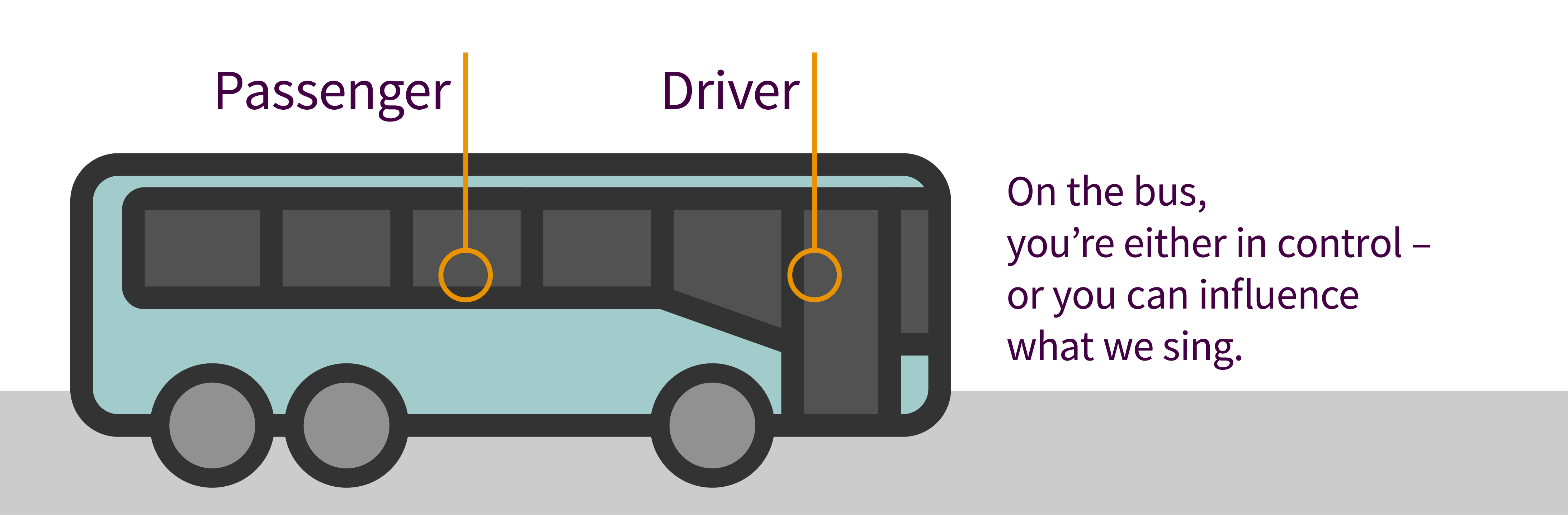
We can drive the bus, or we can join in. It’s important to recognize when you should be driving the bus. In those situations, you’re responsible and can primarily affect the outcome. There are also situations when you can’t. Recognize yourself as a passenger with a stake in the destination and who may be able to influence the driver and those around you.
This simple exercise was a pivotal moment for me. By the end of the session, I realized most of what worried me was outside my direct control. I set out to spend my energy and focus my efforts where I could actually make a difference.
Can you control your reputation?
Many of us spend time worrying about what others think about us. Our reputations can impact what projects we’re given, the alliances we form, and the way others treat us. It’s wise to be concerned with our reputation, but the question remains: can you truly control it?
Well, yes and no. Our reputation is built on two key factors: our actions and the perceptions of others. Although we cannot directly control how others perceive us, we can influence those perceptions. People shape their views based on their biases and our demonstrated actions. We have control over our self-awareness, the narratives we create about ourselves, and how those narratives affect our actions. Ultimately, we alone determine our self-image and can choose to embrace our identities and lived experiences.
While self-awareness is crucial, it's equally important to recognize that we control our responses to reputation-related challenges. Are these challenges real? Are they a lion in the room – or are they a lion roaring only in your mind? If they are fair and grounded, prioritize making the necessary changes. You decide what you should invest in changing and what should be politely ignored. Their reality is not your reality. This consciousness is critical – especially in discussions about inclusivity and leadership. Remember the three things you control.
-
You control your level of self-awareness.
-
You control your work ethic and your performance.
-
You control your response to challenges of your reputation.
Why It Matters Today
Today, these lessons remain incredibly pertinent – maybe even more with challenges like inflation, political tensions, and personal issues like managing my daughter’s diabetes. While these issues impact me, expanding my coaching practice is one area where I can affect change. This is not me ignoring broader societal issues. This is me choosing the battles with outcomes I can best affect. This helps me maintain my personal well-being.
3 Steps for a Return on Energy
-
Name it.
Often, simply naming your concerns can diminish their power over you.
-
Claim your focus.
Decide consciously to spend your energy on what you can influence.
-
Be patient with yourself.
The journey to focusing on your role as the bus driver is a marathon, not a sprint. Give yourself grace as you navigate this path.
As we face today’s complexities, remember that where you choose to focus your energy can define your success, as well as your peace of mind and satisfaction.
Take a moment today to reflect. Are you investing your energy where it will return the most value?




Responses